Introduction
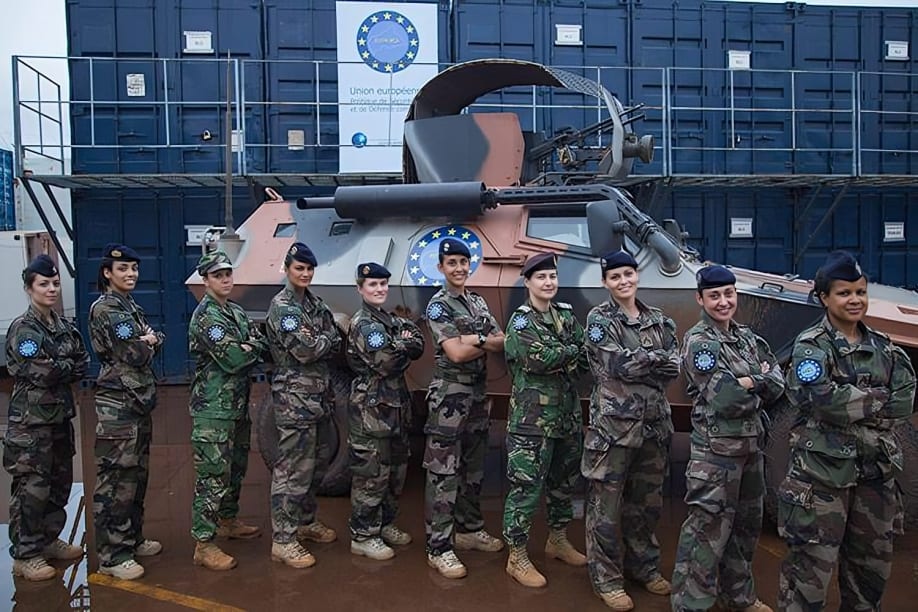
Since 2016, the European Union Training Mission in the Central African Republic (EUTM RCA) has been one of the most visible military engagements of the EU under the Common Security and Defence Policy (CSDP). Established through Council Decision (CFSP) 2016/610, the mission was mandated to contribute to the development of a “modernised, effective and democratically accountable” Central African Armed Forces (FACA).1 EUTM RCA built upon earlier EU operations— EUFOR RCA (2014–15) and EUMAM RCA (2015–16)—which laid the groundwork for reforming the security apparatus following the collapse of state authority after the 2013 Séléka rebellion.
The mission’s scope has progressively evolved through several Council Decisions that extended and adapted its mandate to give strategic advice, operational training and education. These included extensions in 2018, 2020, 2022, and 2024, with the most recent decision prolonging operations until 19 September 2026. Despite this long- standing engagement, the Central African Republic (CAR) continues to experience severe instability, weak governance, and contested sovereignty, with the presence of external actors—most notably the United Nations Multidimensional Integrated Stabilization Mission in the Central African Republic (MINUSCA) and the Russian Wagner Group—complicating the EU’s reform agenda. This enduring fragility raises a critical question: To what extent has the European Union Training Mission in the Central African Republic (EUTM RCA) strengthened the CAR’s security sector, given the mission’s evolving mandate and the constraining influence of external actors such as MINUSCA and the Wagner Group?
EUTM RCA serves as an important test case for assessing how the EU translates its normative and institutional ambitions into practice in fragile and conflict-affected contexts. While the EU’s official discourse frames the mission as a success—having trained over 9,000 FACA personnel by mid-2025—independent analyses reveal more complex realities. Evaluations by Stockholm International Peace Research Institute (SIPRI), for instance, highlight that while EUTM RCA has contributed to technical capacity building and human resource development, its broader impact on structural defence reform and accountability has been marginal. Limited national ownership, political fragmentation, and inadequate mechanisms for monitoring trainees in the field continue to constrain the mission’s effectiveness.
Beyond operational results, this study argues that understanding “effectiveness” requires interrogating the political and legal frameworks that shape what the EU can do, and how it legitimises its actions. While existing literature often focuses on issues such as the number of personnel trained, strategies adopted, or cooperation frameworks, there is limited analytical work on how effectiveness is defined, who defines it, and on what basis claims of success or failure are made. Understanding who makes these claims—EU institutions, the CAR government, MINUSCA, or civil society actors— opens a critical avenue to interrogate how knowledge about “success” is produced and politicised in security interventions. This project, therefore, goes beyond a descriptive account to analyse the discursive, institutional, and political dimensions that underpin these claims.
The preceding section 2 develops a conceptual framework of "effectiveness", demonstrating how different actors: the EU, CAR authorities, the UN, and external partners, advance competing standards of success. The core of section 3 analyses how MINUSCA's stabilisation approach and Wagner's unconditional, regime-centred security support undermined EUTM RCA across three dimensions: operationally by reducing the relevance of EU-trained forces, institutionally by fragmenting chains of command and accountability, and politically by weakening incentives for genuine defence reform. The conclusion draws these strands together to show that although the EUTM RCA has generated substantial operational outputs, its overall effectiveness has been structurally constrained by the political and legal environment in which it operates, particularly the presence of MINUSCA and the Wagner Group.
Conceptual Framework: Defining Effectiveness
The question of EUTM RCA’s “effectiveness” is contested and politically loaded. In the literature on peace operations and security sector reform (SSR), effectiveness is typically assessed through three broad categories: operational outputs, institutional transformation through education, and political impact. Operational outputs refer to measurable, technical indicators such as the number of troops trained, advisory missions conducted, and the establishment of training doctrines or curricula. Institutional or governance-related indicators emphasise structural reforms in defence management, human resources, accountability mechanisms, military justice, and the development of functioning command-and-control structures. A third dimension— often overlooked in EU policy documents, concerns the political conditions under which reform is attempted, including elite incentives, the distribution of power, and the extent of local ownership.
EUTM RCA itself has implicitly promoted an output-oriented understanding of effectiveness, highlighting the training of over 7,000 FACA personnel since 2016. EU institutions frequently interpret progress through quantifiable metrics: battalions certified, specialist courses delivered, reintegrated ex-combatants trained, and strategic documents drafted. However, CAR authorities have at times prioritised different forms of “effectiveness,” notably rapid deployment capabilities, territorial recovery, and regime security—objectives that do not always align with the EU’s normative and procedural benchmarks. For MINUSCA, effectiveness is less about the volume of trained soldiers and more about whether the reconstituted FACA contributes to the protection of civilians and stabilisation in contested regions. Independent observers tend to assess effectiveness through the lens of SSR norms and EPON frameworks, emphasising accountability, the rule of law, and long-term institutional resilience.
This plurality illustrates that effectiveness is not a neutral category. Rather, it is a negotiated outcome shaped by the EU’s identity as a normative actor, the CAR government’s security priorities, and the geopolitical interests of other stakeholders such as the UN. A critical assessment must therefore interrogate not only what EUTM RCA has achieved, but also whose standards of effectiveness are applied, and how these standards influence the mission’s strategy, legitimacy, and eventual limitations.
External Actors' Interference and Its Impact on Effectiveness
MINUSCA: Stabilisation Without Security Sector Transformation
The United Nations Multidimensional Integrated Stabilization Mission in the Central African Republic (MINUSCA) was established in 2014 following the collapse of state authority after the Séléka rebellion and escalating intercommunal violence. Acting under a robust Chapter VII mandate, MINUSCA’s primary objectives have been the protection of civilians, support to the political process, facilitation of humanitarian assistance, and the extension of state authority across contested territory. With over 17,000 uniformed personnel at its peak, the mission has played a central role in preventing the complete disintegration of the Central African state by acting as a security guarantor in areas where national forces were absent or ineffective. Its presence has enabled basic territorial stabilisation and electoral processes that would otherwise have been impossible in the prevailing security environment.
However, while MINUSCA has been instrumental in short-term stabilisation, its contribution to long-term security sector transformation has been limited. The mission’s mandate prioritises civilian protection and crisis management rather than the deep institutional reform of the armed forces, which remains formally the responsibility of national authorities and supporting partners such as the European Union. As a result, MINUSCA has often substituted for, rather than enabled, the development of autonomous national security capacity. This substitution effect reduced incentives for Central African authorities to invest political capital in difficult defence reforms, as international peacekeepers continued to provide a security backstop. Consequently, stabilisation was achieved without parallel progress toward sustainable, accountable national defence institutions.
Russia and the Wagner Group: Parallel and Unconditional Security Support
Russia’s security engagement in the Central African Republic intensified from 2017 onwards, primarily through the deployment of private military contractors associated with the Wagner Group. Operating alongside a small number of official military instructors, Wagner personnel provided combat support, training, and protection to the Central African government, particularly during periods of heightened insurgent activity. Unlike multilateral missions, Wagner’s involvement was framed as a bilateral partnership focused on regime survival and rapid battlefield gains. This approach appealed strongly to CAR political elites facing immediate threats from armed groups and electoral violence, especially during the 2020–2021 crisis.
Crucially, Wagner’s assistance was largely unconditional. Training and operational support were delivered outside internationally coordinated security sector reform frameworks and without meaningful oversight mechanisms related to human rights, civilian control, or institutional accountability. Wagner personnel operated in close proximity to political elites, often bypassing formal chains of command and embedding themselves within presidential security structures. While this arrangement enhanced short-term regime security, it entrenched personalised and informal modes of force provision. Rather than strengthening state institutions, Wagner’s presence reinforced dependence on external combat actors and deepened patterns of elite capture within the security sector.
How MINUSCA and Wagner Constrained EUTM RCA’s Effectiveness Operational outputs.
In terms of operational outputs, the presence of MINUSCA and the Wagner Group affected the practical impact of EUTM RCA’s training activities. While EUTM RCA measured effectiveness through quantifiable outputs, these outputs do not translate consistently into autonomous operational performance on the ground. This is because EUTM RCA does not control who is nominated for training; it must rely entirely on MINUSCA’s screening process to ensure that candidates are not implicated in human rights abuses. At the same time, Wagner-supported units received parallel training and direct combat assistance, allowing them to achieve short-term battlefield results without relying on EU-trained doctrines or procedures. As a result, EUTM RCA’s output-based achievements, while substantial on paper, were partially offset by the availability of alternative security providers that reduced the operational relevance of EU training.
Institutional transformation.
At the level of institutional transformation, external interference more directly undermined EUTM RCA’s core reform objectives. The mission sought to strengthen defence governance through unified command structures, transparent human resource management, military justice, and civilian oversight. However, ‘Russian training does not adhere to the same IHL standards as EUTM RCA courses’, often bypassing formal institutional chains of command, reinforcing personalised and informal decision-making within the security sector. Simultaneously, MINUSCA’s mandate focused on coordination and support rather than enforcing deep structural reform, limiting its capacity to incentivise institutional change. This resulted in fragmented security sector development, with different units trained under divergent doctrines and accountability standards.
Political impact.
Politically, the combined presence of MINUSCA and Wagner reshaped elite incentives in ways that structurally constrained EUTM RCA’s effectiveness. The official stance of EUTM RCA is that an EU mission is not permitted to work with private security actors like the Wagner Group.42 On the other hand, Russia insisted that its contribution to CAR’s peace process be formally acknowledged internationally by the UN, a stance that contributed to the postponement of MINUSCA’s mandate renewal in 2018. At the same time, differing positions between EUTM RCA and MINUSCA obstructed the 2019 renewal of the Joint UN– EU Support Plan on SSR.
Furthermore, EUTM RCA relied on conditionality and long-term engagement to encourage national ownership of reform, but these mechanisms lost leverage once CAR authorities could secure regime stability through alternative partnerships. Wagner’s unconditional support prioritised regime survival and territorial control, while MINUSCA’s stabilisation mandate ensured a minimum level of security regardless of reform progress. This reduced political pressure on the government to comply with EU norms related to accountability, sequencing, and civilian control. Consequently, effectiveness became politically redefined: for CAR elites, success increasingly meant short-term stability and loyalty-based security provision rather than institutional reform and long-term transformation.
Conclusion
EUTM RCA illustrates the structural tension between the EU’s normative ambitions for security sector reform and the political realities of a fragmented and externally penetrated state. Although the mission has delivered substantial operational outputs in the form of trained personnel, strategic advice, and institutional frameworks, its capacity to translate these into sustainable security governance has been persistently constrained by the parallel stabilisation role of MINUSCA and the unconditional, regime-centred support provided by the Wagner Group. These external actors reshaped both incentives and authority within the Central African security sector. As a result, EUTM RCA’s emphasis on accountability, civilian control, and professionalised command structures has struggled to gain political traction, despite technical progress on paper. The case, therefore, shows that effectiveness in EU training missions cannot be assessed solely through outputs or mandates but must be understood as a politically conditioned outcome shaped by competing external interventions and domestic elite priorities.
About the author
Research Assistant, European Parliament & Erasmus Mundus Scholar (International Law), University of Glasgow
Augustine Ushie is a lawyer and Research Assistant at the European Parliament in Brussels. His work focuses on Africa–EU relations, with particular emphasis on nuclear non‑proliferation, disarmament, and migration governance. He is currently completing his Erasmus Master’s degrees at Radboud University in Nijmegen, Netherlands. His academic and professional interests centre on the intersection of international…
Full profile and articles