On August 31, the Permanent Court of Arbitration situated in the Hague, Netherlands, ruled that India’s decision to put the Indus Waters Treaty of 1960 in “abeyance” has no justification under international law and that the treaty remains fully in force. India put the treaty in abeyance following a 2025 terrorist attack in Pahalgam in Indian-administered Jammu and Kashmir, as it accused its neighbour, Pakistan of supporting cross-border terrorism against India. The treaty which was negotiated with the mediation of the World Bank, is perhaps one of the most successful water sharing endeavors around the world. The Court categorically refused India’s justification that the measure was a valid response to Pakistan’s support for cross-border terrorism. Although India has not identified its response as a countermeasure under international law, some of the Indian commentators and press have done so (Indus Waters Western Rivers Arbitration, PCA, para 296).
Whether considered as a countermeasure or otherwise, the observation of the court regarding the response to an alleged state-sponsored terrorism can be pivotal in many other existing and future cross-border conflicts. This blog looks into the Court’s observation regarding India’s response to Pakistan’s alleged support of cross-border terrorism and other responses that India could have made in this regard.
Court’s view on Abeyance as a Response and Countermeasure against terrorism
The Court considered that the India’s decision to put the treaty in abeyance, a phrase that is ambiguous in meaning (para 210-211), could mean a suspension or termination (para 220). From the very onset, India has rejected the jurisdiction of the court and refused to participate in the proceedings, instead arguing that a World Bank-appointed Neutral Expert is the proper forum for the dispute under the treaty. This deprived the court from getting an accurate legal justification relied by India behind its decision.
According to the Court, even if India’s allegations of Pakistan’s support for cross-border terrorism were assumed to be true, it cannot constitute a material breach of the treaty (para 260-267). According to article 60(3) of Vienna Convention on the Law of Treaties, 1969, material breach of a treaty could result from its repudiation or violation of any of its provision which is essential to its object and purpose. Neither the treaty provides for any obligation regarding security, terrorism or use of force (para 263), nor could India provide any evidence showing cross-border terrorism effected its operation or construction of Hydro-Electric Plants (para 264-265).
Besides, even as a countermeasure, holding the treaty in abeyance failed three restrictions of a valid countermeasure. Firstly, holding the treaty in abeyance will be in violation of human rights obligations of India, mostly stemming from the International Covenant on Economic, Social and Cultural Rights (ICESCR), as withholding or diverting the water of the rivers will affect the lives of millions of civilians in Pakistan in regards to subsistence need, food, water, health etc. (para 307-310). Secondly, countermeasures are meant to be temporary measures and thus, any irreversible act that may permanently destroy a treaty’s object and purpose does not qualify as such (para 311-313). As per the language of the Draft articles on Responsibility of States for Internationally Wrongful Acts, countermeasures are only ‘for the time being’ (article 49(2)), whose justification will end when a specific goal is achieved. These also means that the measures must be reversible in nature and must not create a situation that cannot be rectified (Commentary of article 49, para 7). Lastly, India is not relieved from fulfilling its obligations under an applicable dispute settlement procedure, even when taking countermeasure (para 314-316). Thus, placing a treaty in abeyance to suspend binding arbitration or judicial proceedings is not a permissible countermeasure.
Criticism of Court’s View
However, Court’s decision admits for criticism in some places. Firstly, Court’s view that cross-border terrorism falls completely outside the scope of the Indus Waters Treaty is purely a textual interpretation. For any bilateral treaty to exist and function properly, it is essential that states in question act in good faith, have mutual trust and are not hostile towards each other. The International Court of Justice in the Nuclear Tests Case (Australia v. France) stated that the principle of good faith along with trust and confidence remains some of the basic principles governing the creation and performance of legal obligations (para 46). India has asserted that cross-border terrorism violated “cooperative spirit”, “goodwill”, and “friendship” – all of which are mentioned in the preamble of the treaty (para 197). A ruling that sustained security threats, state-sponsored terrorism, conflicts, etc. would not affect the performance of a bilateral treaty ignores the reality and need of cooperation behind a treaty’s fulfillment. Secondly, even if it is assumed that a state cannot suspend procedural treaty obligations to compel a state to cease sponsoring cross-border terrorism, its options are limited. In fact, it will lead states to frequently resort to military force under article 51 of the UN Charter. Lastly, the Court’s observation that security concerns and regional tensions existed when the treaty was signed and thus, could not be used for invoking “fundamental change of circumstances” (para 281) also seems to ignore the adverse effect of cross-border terrorism and the growing tension between the two neighbours over the years. The disagreement between India and Pakistan regarding Kashmir although have existed for decades with major wars between the countries, both the countries have at least tried to maintain friendly diplomatic ties, with several attempts to improve this relationship (See, for example, 1972 Simla Agreement, 1999 Lahore Declaration). However, the relationship has reached new low in the last decade, with India blaming Pakistan for support sponsoring and supporting cross-border terrorism.
How should States respond to Cross-border Terrorism?
That all being said, when a state is faced with acts of state-sponsored terrorism, it could practically resort to many avenues. As mentioned invocation of article 51 of UN Charter remains, which though valid, is not desirable, as it might result in full-fledged use of force. State sponsorship of terrorism have always carried the risk of military reprisals from the injured state. In fact, a military conflict did take place between India and Pakistan after the events of Pahalgam and the subsequent suspension of Indus Waters Treaty.
India also expelled diplomats of Pakistan and closed its border, which remains a lawful response to such crisis. However, if one was searching for a balanced response between measures which are merely ceremonial such as expelling diplomats and extreme measures such as resorting to military force, they could point towards temporary suspension of bilateral treaties, which are essential to states, such as the Indus Waters Treaty is to both India and Pakistan. But, as the Court pointed out such suspension are not valid if they are in violation of a state’s human rights obligations under the ICESCR (para 307-310). States have the recourse to sanctions and other mechanisms under chapter VII of the UN Charter. However, actions under this chapter would require a state substantiating its claim before the Security Council and also succeed over the politics of veto. Even without the Security Council intervention, a state has the option of using the obligations set out in UN Security Council Resolution 1373, adopted in the aftermath of 9/11 attacks, to press states, neighbours and other allies to hold a sponsor state accountable. This resolution obliges states to take necessary actions to prevent and suppress terrorism. Thus, in order to impose an effective non-violent response to state-sponsorship of terrorism, the injured state needs to persuade other states as well.
As India refused to participate in the Court proceedings, it missed the opportunity to present formal evidence of its allegations against Pakistan. Nonetheless, the Court proceeded with the assumption that India’s claims were true (para 262) and under such assumption held that placing a treaty in abeyance is not a valid response to cross-border terrorism. Therefore, state’s options for unilateral effective non-violent response to state-sponsored terrorism seem to have reduced due to this decision of the Court.
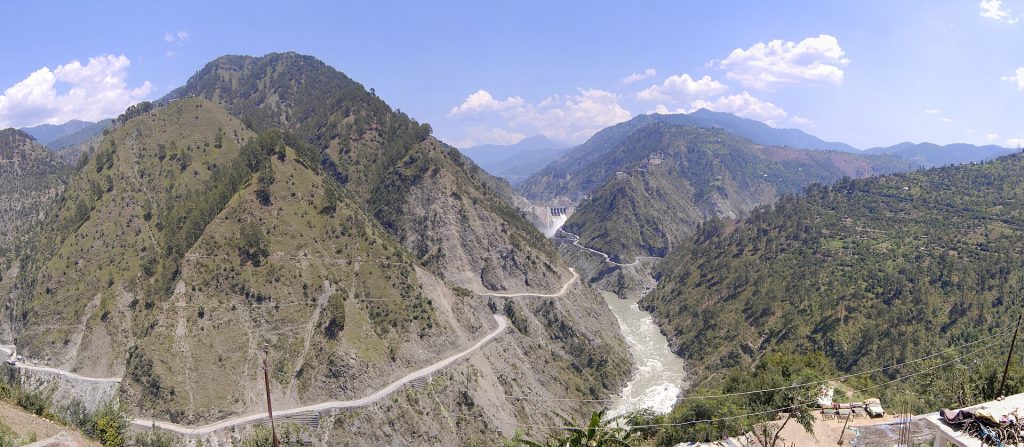
Featured image: Baglihar Dam on the Chenab River, Jammu and Kashmir. Photo by Gtsenthilnath, via Wikimedia Commons, licensed under CC BY 3.0.
About the author
Lecturer, Chittagong Independent University
Arafat Ibnul Bashar is a Commonwealth Shared Scholar who obtained an LL.M. in Human Rights from the University of Glasgow (UK). Arafat has obtained his LL.B. (Hons) and LL.M. from the University of Chittagong, and a Diploma in ESDR from Kathmandu School of Law (Nepal). With over three years of teaching experience, he is currently…
Full profile and articles