
Why This Matters Now
Bangladesh's pharmaceutical industry meets roughly 98% of domestic demand and exports to more than 150 countries, built, in large parts, on a TRIPS waiver that lets manufacturers produce patented medicines as generics without paying royalties. Beximco's cystic fibrosis drug captures the stakes $6,375 per child per year against roughly $370,000 for the branded US equivalent.
Bangladesh is due to graduate from LDC status on 24 November 2026. As of mid-2026, the UN General Assembly still has not decided whether to grant the three-year deferral to 2029 that Dhaka has requested, which the UN Committee for Development Policy has recommended approving. Graduation itself means moving to ordinary TRIPS flexibilities, including enforceable 20-year patents – a shift industry groups warn could push cancer-treatment costs to $2,000-$3,000 a month. The ready-made garment sector tells us a parallel story as they supply roughly 80% of Bangladesh's export earnings, whereas the sector’s actual contribution is closer to 9-11% of GDP and tariff pressure on that sector is part of why industry wants a longer deferral too.
This analysis argues three things – graduation narrows Bangladesh's legal room without eliminating it; the risk is not any single disappearing flexibility but rather an unresolved WTO negotiation over what survives graduation; and the most consequential domestic gap in the Patents Act 2023 is the absence of an anti-evergreening provision.
Two Transition Periods, One Trigger: The Unresolved Post-Graduation Question
Two transition periods matter, and both end automatically at graduation regardless of what their own expiry dates say. The pharmaceutical-specific one, set by a TRIPS Council decision of 6 November 2015 (IP/C/73), runs to 1 January 2033 or graduation, whichever is earlier; a companion decision (WT/L/971) covers the mailbox and marketing-rights obligations on the same terms. The general Article 66.1 period, extended on 29 June 2021 (IP/C/88) to 1 July 2034, carries the same proviso. That conditional structure is what makes graduation the real trigger, not the calendar date (2033 or 2034).
This is where the live negotiation comes in. When the LDC Group won the 2021 extension, it also asked for flexibilities to continue twelve years past graduation; members could not agree, and remitted the question to the General Council instead. At MC14 in March 2026, the LDC Group sought a three-year continuation of certain LDC-specific flexibilities after graduation, including in TRIPS. Consensus was not reached, and discussions are continuing in the Committee on Trade and Development. As of this writing, the post-graduation question therefore remains unresolved.
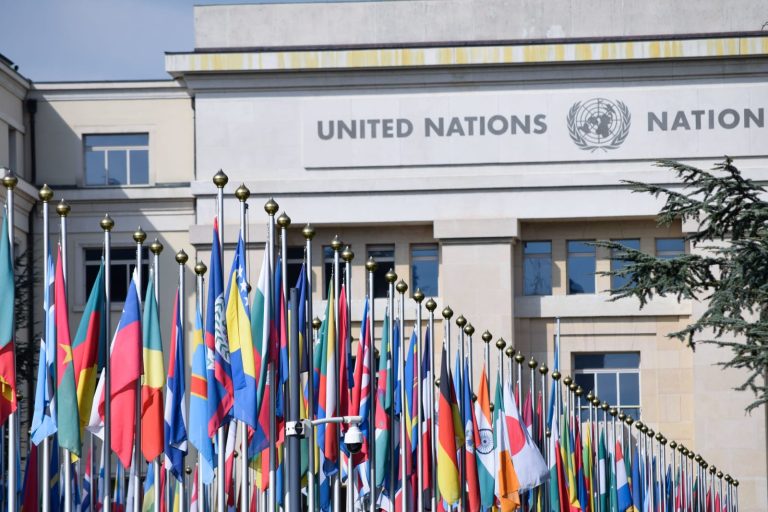
For Bangladesh, that means, if it graduates on schedule, or even after a deferral to 2029, without a WTO resolution, its pharmaceutical flexibilities lapse the moment graduation takes effect, years short of 2033 or 2034. This is the single most consequential legal fact here, and one Bangladesh can still influence in Geneva, not only through domestic legislation.
Interpreting TRIPS Through the Right to Health
Article 31(1) of the Vienna Convention on the Law of Treaties requires treaty interpretation in good faith in accordance with the ordinary meaning of the terms in their context and in light of the treaty’s object and purpose, while Article 31(3)(c) requires account to be taken of relevant rules of international law applicable between the parties. These include Bangladesh’s commitments under the ICESCR, including the ICESCR's right to the highest attainable standard of health, which General Comment No. 14 treats as including access to essential medicines. The 2001 Doha Declaration operationalizes the same principle for TRIPS directly, and Articles 7-8 of the Agreement itself tie IP protection to social welfare. Together with the Doha Declaration and TRIPS Articles 7–8, these obligations support a public-health-sensitive interpretation and implementation of TRIPS.
Flexibilities Bangladesh Can Still Use
Three flexibilities survive graduation on their own terms. Compulsory licensing is the best known as India's 2012 license for Bayer's Nexavar cut its price by 90%, and Brazil licensed efavirenz in 2007 after negotiations failed. Bangladesh's Patents Act 2023 gives this a domestic footing in Sections 36, 39, and 40, with Section 39 mirroring TRIPS Article 31bis for exporting to countries lacking manufacturing capacity of their own. Parallel imports work similarly as Section 60 adopts international exhaustion, letting Bangladesh source medicine wherever it's cheapest. And Bolar-type research exceptions, permitted under Article 30 of TRIPS, and confirmed for use in Canada – Pharmaceutical Patents, are implemented in Section 61, letting generic manufacturers test and file for regulatory approval before a patent expires.
The Missing Safeguard: Evergreening and the Absence of a Section 3(d)
Bangladesh has no equivalent of Section 3(d) of India's Patents Act, which denies patents on new forms of a known substance unless the applicant can prove the new form significantly improves the substance's known efficacy. Without that threshold, Bangladesh’s patent law has no specific enhanced-efficacy safeguard equivalent to India’s Section 3(d) for screening secondary pharmaceutical patents.
India's Supreme Court gave the provision its enforcement in Novartis AG v. Union of India, rejecting a patent on a reformulated imatinib, better known as Glivec/Gleevec. India’s experience nevertheless shows that Section 3(d) can coexist with a large and internationally significant pharmaceutical industry, although that fact alone does not establish its effect on FDI or technology transfer. An applicant must show that the claimed improvement translates into enhanced therapeutic efficacy; increased bioavailability alone is insufficient. The Court was careful to frame this as a narrow, evidentiary test rather than a bar on all incremental inventions, which is exactly the kind of check Bangladesh's Act still does not have.
The obvious counterargument is worth taking seriously as the originator companies argue that strict, uniform patent enforcement is what attracts pharmaceutical FDI and technology transfer in the first place, and that an efficacy threshold could deter it. India's own experience cuts against that claim, Section 3(d) has coexisted comfortably with India becoming the world's largest generics exporter and an increasingly significant hub for licensed, patented-drug manufacturing, suggesting a well-designed efficacy standard filters weak patents without deterring genuine innovation.
Thailand's 2006-2008 government-use licenses on HIV, cardiovascular, and cancer drugs and China's Bolar exceptions and patent-linkage system, both show TRIPS flexibilities working when institutions actually use them. But without an evidentiary threshold like India's, none of these tools on their own stops evergreening.
Policy Recommendations
Two priorities follow directly from the argument above. First, Bangladesh should add a Section 3(d)-style anti-evergreening threshold to the Patents Act 2023, requiring proof of enhanced therapeutic efficacy before a reformulation patent is granted. Short of full amendment, examiners can already apply the existing novelty and inventive-step rules more rigorously in the meantime. Second, Bangladesh should put as much diplomatic weight behind the unresolved WTO negotiation as it does behind its domestic statute. The gap between the existing LDC transition arrangements and the unresolved question of post-graduation treatment remains a major source of uncertainty, with discussions continuing in the Committee on Trade and Development.
Alongside these, Bangladesh should streamline compulsory-licensing procedures with clear, pre-published criteria, strengthen coordination between the DPDT and drug regulators, and keep using Section 39's export license to supply countries without manufacturing capacity while building domestic API capacity for the long run.
Conclusion
Graduation will not, on its own, end Bangladesh's ability to keep medicines affordable. Compulsory licensing, parallel imports, and Bolar exceptions all survive it, and the Patents Act 2023 gives each a statutory home. But two gaps still stand between that framework and a genuinely secure outcome, an unresolved WTO negotiation over whether any flexibility survives graduation, and a domestic statute unlike India’s that has no defence against evergreening, neither closes itself. If Bangladesh keeps fighting for these arguments, both at the WTO in Geneva and at home in Dhaka, graduation doesn't have to mean higher medicine prices.
About the author
Kumkum Mahzabin is an aspiring barrister, pursuing her Bachelors in Law from London College of Legal Studies (South) under University of London International Programme. Alongside academics, she has been involved in various extra-curricular scopes ranging from campus ambassadorship programmes and hosting/anchoring to participating in debate, model united nations stimulations, moot courts competitions, mock trials, mediation-arbitration…
Full profile and articles