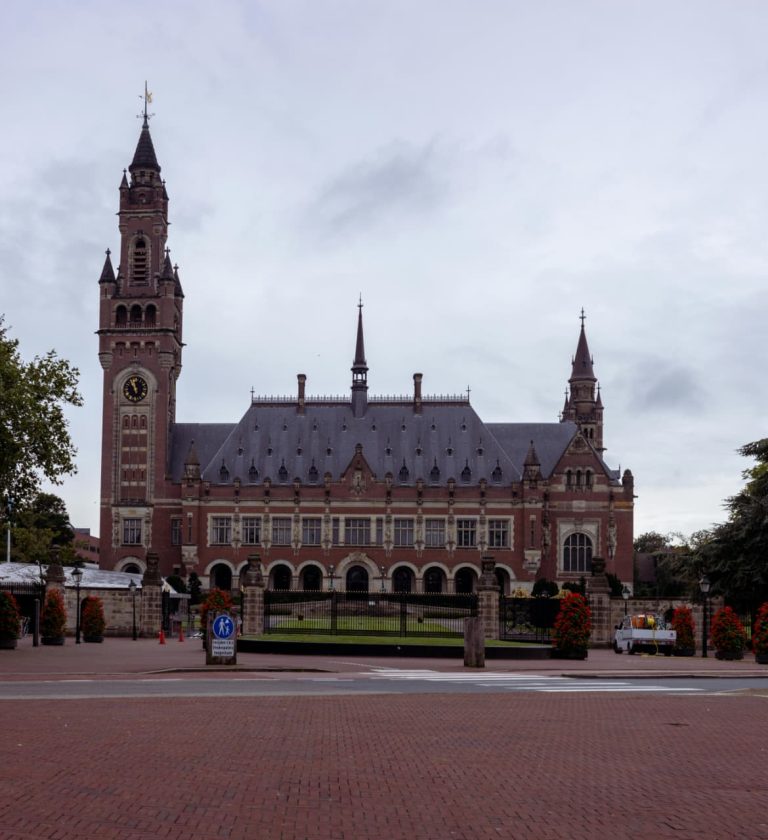

The International Court of Justice’s Advisory Opinion of 2025 on States’ obligations in respect of climate change confirms that climate harms are inseparable from the enjoyment of human rights. The Court stressed that climate change directly affects the enjoyment of rights to life, health, and an adequate standard of living, and must be interpreted in light of the UN General Assembly resolution 76/300 recognizing the right to a clean, healthy and sustainable environment. It also clarified that obligations of prevention, cooperation, and due diligence extend across generations, requiring mitigation and adaptation policies that protect future persons as much as present ones.
This reasoning converges with the Inter-American Court of Human Rights’ OC-32/25, which established that the right to a healthy environment protects “present and future generations” and that States must integrate intergenerational equity into environmental governance. The Court underscored that indigenous peoples face particular risks, as their survival depends on the integrity of their lands and ecosystems. It required that States conduct free, prior, and informed consultation for projects with environmental impacts, highlighting that indigenous participation is indispensable to protect cultural identity and the rights of descendants.
These principles are not isolated innovations. In earlier judgments such as Saramaka People v. Suriname (2007), the Inter-American Court held that large-scale development projects in indigenous territories required effective participation, benefit-sharing, and environmental impact assessments. In Kaliña and Lokono Peoples v. Suriname (2015), it found that extractive concessions granted without adequate consultation violated collective property rights and endangered cultural continuity. And in Indigenous Community Yakye Axa v. Paraguay (2005), the Court recognized that denial of access to ancestral lands jeopardized not only the community’s present existence but its long-term survival as a people. These cases anticipated the dual focus of OC-32/25: protection of environment and culture as preconditions for both current wellbeing and intergenerational continuity.
Placed side by side, the ICJ and Inter-American jurisprudence show an evolution in international law’s temporality. Responsibility is no longer confined to retrospective reparation but includes prospective duties to anticipate harm, to progressively enhance ambition in Nationally Determined Contributions under the Paris Agreement, and to ensure that environmental governance integrates distributive and cultural justice. For indigenous communities, this reframing means that inadequate mitigation or adaptation can be claimed not as political failures but as legal violations.
The methodological approaches also converge. The ICJ integrated IPCC assessment reports to define the scope of due diligence, while the Inter-American Court relied on indigenous knowledge as a normative reference point. Science supplies standards of urgency; indigenous epistemologies provide contextual legitimacy. Together, they broaden the epistemic foundations of adjudication.
On responsibility, the ICJ confirmed that a State may incur responsibility when its conduct falls short of due diligence and results in “sufficiently direct and certain” harm. It further suggested that failing to strengthen NDCs over time may itself be an internationally wrongful act, even absent immediate damage (§ 240-247, 444-447). The Inter-American Court has complemented this with remedies tailored to cultural survival: in Saramaka it ordered benefit-sharing and safeguards against future exploitation; in Yakye Axa it required restitution of land; and in Kaliña and Lokono it demanded recognition of collective rights alongside environmental protection. These remedies exemplify how climate-related reparations must extend beyond monetary compensation to encompass territorial integrity and cultural continuity.
What emerges is the gradual consolidation of a principle of intergenerational equity as a general principle of international law. It is crystallized through universal reasoning at the ICJ and communitarian reasoning at the Inter-American Court, each reinforcing the other. By focusing on indigenous peoples, whose vulnerability illustrates the stakes of climate inaction, both courts ground intergenerational equity in lived realities rather than abstract ideals.
The next step is operational: defining measurable standards for ambition in NDCs, embedding meaningful consultation in climate governance, and ensuring that compliance mechanisms assess not only current emissions but future viability. Without such operationalization, intergenerational equity risks remaining aspirational. With it, the jurisprudence of the ICJ and the Inter-American Court may anchor a shift in responsibility from a backward-looking model to a forward-looking duty of transformation.
About the author
Master’s student in Public International Law, University of São Paulo
Isabela Soares Bicalho is a Master’s student in Public International Law at the University of São Paulo, under the supervision of Professor Dr. Alberto do Amaral. Holds a Law degree from the Federal University of Uberlândia, with academic mobility in Law and Criminology at the Lusófona University of Humanities and Technologies (ULHT) through a scholarship…
Full profile and articles