
Introduction
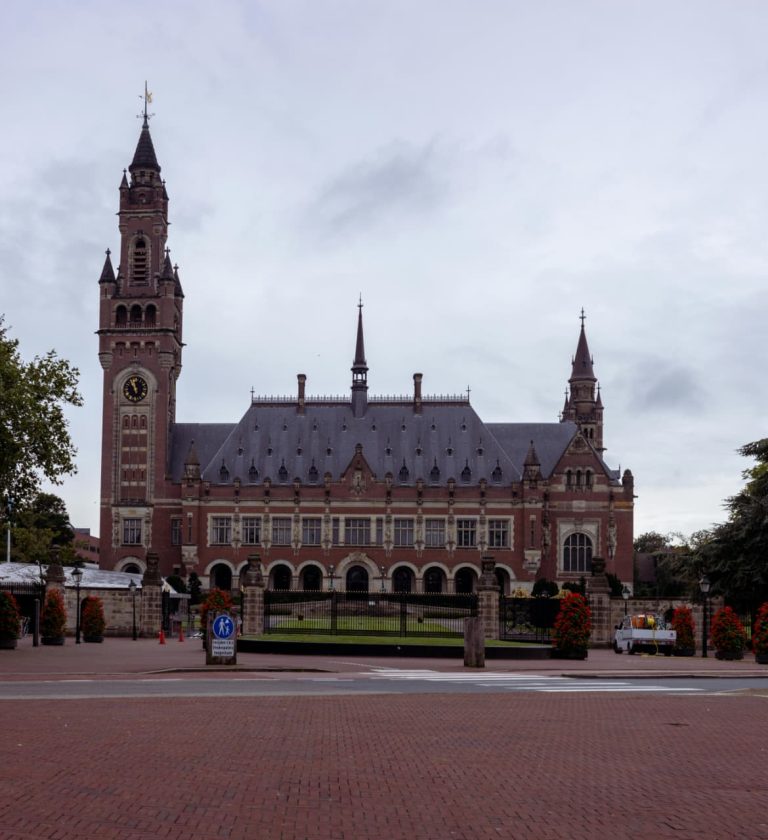
A landmark advisory opinion was delivered by the International Court of Justice (ICJ) on 23 July 2025 on states’ responsibility to address climate change, marking a crucial turning point in the global pursuit of climate justice. The world’s highest Court, for the first time in history, interprets state responsibility and obligation for climate change, advancing the climate emergency from a purely political and scientific issue to a pressing legal obligation under international environmental and human rights law. The ICJ’s judgment, delivered amid growing climate litigation, advances transboundary accountability by grounding state responsibilities in human rights, intergenerational equity, and the due diligence principle, while equipping vulnerable nations with a stronger legal vocabulary to influence global climate governance. While advisory opinions are not legally binding, this pronouncement carries immense persuasive and normative value. It sets a precedent that will undoubtedly influence climate litigation and policy worldwide, offering a unique horizon for climate-vulnerable nations, such as Bangladesh.
Shifting the Debate from Politics to Law
The alleged flaws in the present global climate governance tools, especially the Paris Agreement, which primarily rely on voluntary compliance and Nationally Determined Contributions (NDCs), prompted this legal action. The petitioning governments sought an authoritative ruling from the ICJ in an attempt to emphasise legal accountability rather than political dispute. The Court’s decision that a State’s obligation to safeguard the climate is independent of its ratification of specific climate agreements is a breakthrough in international environmental law.
States’ Undeniable Obligations to Climate Protection
Drawing on a well-established principle in international jurisprudence, including the Trail Smelter Arbitration, the Declaration of the United Nations Conference on the Human Environment (Stockholm Declaration 1972), and the ICJ’s own Pulp Mills and Gabčíkovo-Nagymaros cases, the ICJ upheld states’ customary duty to prevent major transboundary environmental harm. The Court emphasised the significance of mitigation, adaptation, transparency, and international collaboration while further reinforcing the Paris Agreement and the United Nations Framework Convention on Climate Change (UNFCCC). Importantly, it emphasised the core principle of climate rights: common but differentiated responsibilities (CBDR).
Notably, the ICJ Advisory Opinion acknowledged the profound connection between climate change and human rights, reaffirming that fundamental rights, including the rights to food, housing, water, life, health, and a healthy environment, are all directly threatened by environmental degradation. This acknowledgement is consistent with substantial regional and national decisions, such as Urgenda Foundation v. Netherlands, Leghari v. Pakistan and Neubauer, et al. v. Germany. In keeping with earlier rulings such as Oposa v. Factoran, the ICJ also adopted the idea of intergenerational justice, clearly requiring nations to protect natural resources for both now and future generations. The Court ruled that governments must use the greatest available scientific evidence to inform their climate policy decisions. This entails passing strong domestic laws to control emissions from both public and private sources, integrating climate concerns into all aspects from infrastructure to finance to development, and meeting commitments to international cooperation, especially by providing vulnerable states with financial and technological support. The duty to cooperate was construed broadly, extending beyond present treaty obligations and placing a strong emphasis on good faith and solidarity, particularly for industrialised nations with a larger historical contribution to emissions.
Consequences for Non-Compliance
In response to the second query, the Court ruled that states may be held internationally liable for their failure to fulfil their duties. The following are the listed legal repercussions:
Cessation: Requiring the termination of wrongful conduct, such as persisting in fossil fuel subsidies or delaying transition policies that exacerbate climate change.
Assurances of non-repetition: Obligating states to implement systemic measures to prevent future environmental harm.
Reparations: While declining to specify amounts or models of liability, the Court indicated that reparations could take various forms, including financial compensation, restitution, or assurances of non-repetition.
The Court explained that significant contributions to global emissions combined with a failure to act diligently might establish culpability under international law, even though it declined to impose blame on specific governments. Additionally, it suggested that these findings may be used by national and regional courts and tribunals to guide future climate lawsuits.
A Critical Analysis: Strengths and Limitations
The Advisory Opinion is significant because it consolidates key principles such as the UNFCCC, the Paris Agreement, and the United Nations Convention on the Law of the Sea (UNCLOS) from human rights law, international law, and treaties. This combination reflects a growing understanding in the legal world that we must tackle global environmental crises. However, despite its significant legal contributions, the Opinion also has some apparent limitations, such as it has no binding authority and fails to set clear rules on attribution and reparations.
Evolving Climate Justice Through Legal Novelty
Beyond just political or economic difficulties, the opinion’s normative reinterpretation of climate change as a legal matter is its most important contribution. The Court acknowledged that governments have a moral and legal duty to take preventive and corrective action, based on the principles of international cooperation, due diligence, and the principle of no harm. The broad interpretation of intergenerational equity as a legal concern elevates the discourse on the rights of future generations from aspirational rhetoric to potentially justiciable rights. The right-based framework for climate governance is further connected by the recognition of climate-related human rights, which is consistent with recent national and regional court rulings, such as the European Court of Human Rights’ KlimaSeniorinnen v. Switzerland case, as well as cases like Urgenda v. Netherlands and Leghari v. Pakistan. This emphasis by the ICJ contributes to a transnational legal consensus on the climate crisis.
Reinforcing State Obligations Without Direct Blame
The ICJ maintains a delicate balance by highlighting legal responsibility without explicitly blaming any state. Although the Court could not identify specific states or determine past guilt, it made it plain that a failure to act diligently, especially by major emitters, might constitute a breach of international agreements. While enabling vulnerable states and civil society to use the argument in future legal or negotiation frameworks, this strategy skillfully avoids the possible political backlash that comes with irrefutable responsibility. Furthermore, by acknowledging duties to regulate private organisations, the ICJ recognises the crucial role that multinational firms play in emissions, despite the fact that they are not formally subject to international law. This strategy aligns with contemporary debates on corporate climate accountability, demonstrated by cases like Milieudefensie v. Shell and the Carbon Majors Petition in the Philippines.
A Path Forward for Bangladesh and Global Climate Action
For Bangladesh, one of the most climate-affected nations, the International Court of Justice's opinion furnishes a definitive legal foundation to advocate for climate justice. It reinforces constitutional commitments articulated in Article 18A of the Constitution of Bangladesh, which obligates the state to safeguard and improve the environment, and provides a persuasive framework for understanding environmental negligence as a violation of international obligations.
The clarification provided by the ICJ regarding due diligence may serve as a legal instrument for courts in Bangladesh in pending and future cases concerning industrial pollution, deforestation, or energy projects such as Rampal and Payra. Jurisdictions might now regard the failure of the state to regulate industries with high emissions as a violation of its preventive obligations under international law, thus expanding the constitutional scope of environmental protection. Furthermore, the advisory opinion offers policymakers a reference to strengthen domestic environmental governance. Bangladesh’s legal and administrative structures, such as the Environmental Conservation Act of 1995 and the Climate Change Strategy and Action Plan, can be adapted to align with the ICJ’s principles of prevention, cooperation, and transparency. This entails enhancing environmental impact assessments, incorporating climate risk analysis into fiscal and infrastructural planning, and augmenting regulatory oversight of emissions from the private sector.
On the international stage, Bangladesh may leverage the ICJ opinion to advocate for enhanced climate finance and technology transfer from developed nations in accordance with the CBDR principle. Additionally, this bolsters Bangladesh’s negotiating position within the UNFCCC and other global forums, empowering it to substantiate claims for compensation and adaptation assistance as legally substantiated, rather than solely humanitarian pleas.
Conclusion
The ICJ 2025 advisory opinion signifies a pivotal development in international climate governance by transforming moral appeals into legally binding obligations. For Bangladesh, the opinion provides both a legal safeguard and a strategic instrument: a means to hold entities accountable, strengthen domestic enforcement, and align its environmental governance with emerging international standards. Proper utilisation of this opinion may enable Bangladesh to transform its climate vulnerability into a position of normative influence in shaping global climate law.
About the author
Senior Assistant Judge, Bangladesh Judicial Service
Mst. Asma Mahmud is a Senior Assistant Judge in the Bangladesh Judicial Service with over ten years of experience. She is currently pursuing an M.Phil. degree at the Institute of Bangladesh Studies, University of Rajshahi, while on education leave to focus on her research. Her academic interests center on climate justice and environmental governance, particularly…
Full profile and articles