Introduction
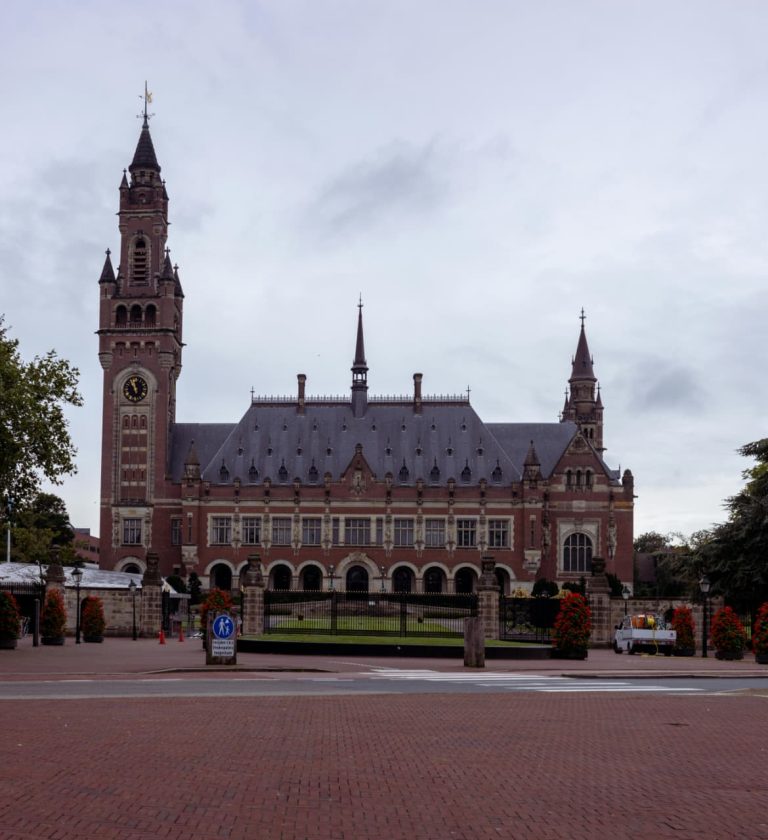
The journey of the International Court of Justice (ICJ) in delivering the Climate Advisory Opinion (CAO) began in 2019. A campaign developed by 27 law students in the Pacific Islands asking for an authoritative interpretation of the ICJ regarding the state obligations on climate change mitigation, adaptation and mediation. Later on, their efforts with support from Vanuatu along with 130 different states advanced a consensus in the UN General Assembly (UNGA) that ultimately resulted in the adoption of UNGA resolution 77/276 requesting the ICJ to provide Advisory Opinion (AO) on two questions: (a) states’ obligations to protect the climate system and the environment; and (b) what are the legal consequences, if they fail to meet these obligations. The objective of this write-up is to explore CAO for revealing the extent of corporate responsibility in remitting both land-based and marine pollutants mixing in the water of the Bay of Bengal in the age of extreme and uncontrollable climate change.
Anthropogenic activities, Marine Climate Change and CAO
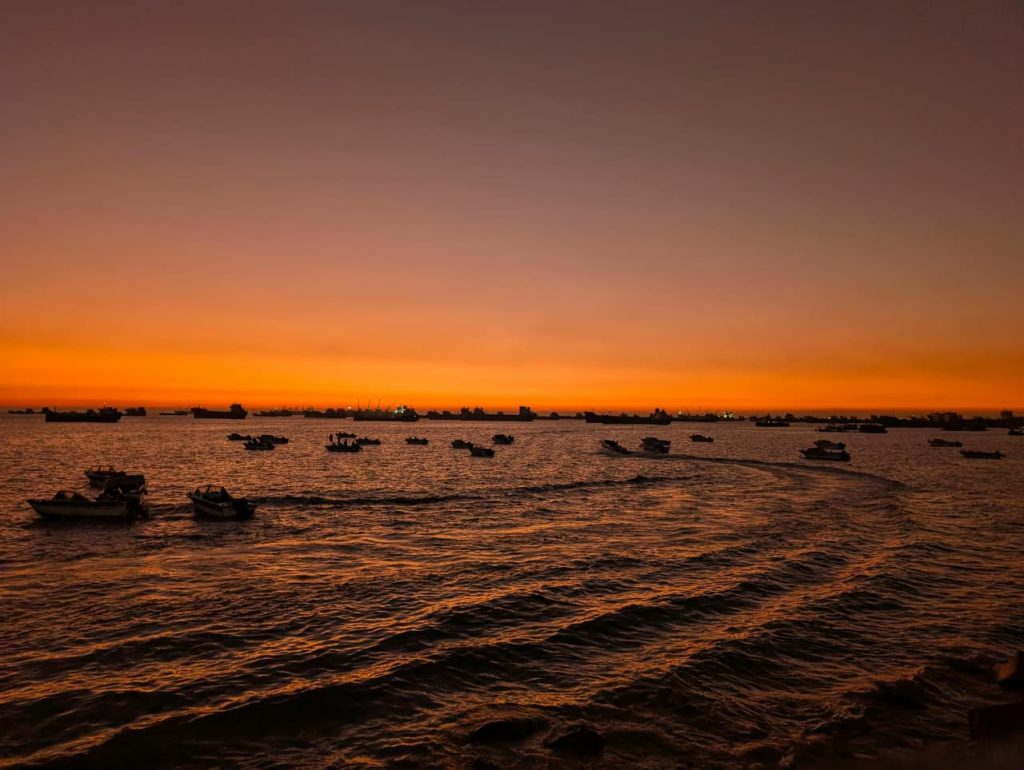
The Bay of Bengal, a biodiversity hotspot, plays a significant role towards economic development and nutrition security, underpinning the lives of millions of people in South Asia. Water is an integral component of the natural environment and human society. Anthropogenic activities pollute water and destroy other living organisms, which are inevitable realities of human consumption. Activities such as falling untreated solid wastes through the sewerage system and from different water sources in the Bay of Bengal, organic or heavy metals and operation of the ship-breaking industries in and through the coastal region, are causing irreparable harm to both the ecological integrity of the Bay and its aquatic biodiversity. Polluted water with harmful chemicals affects human health. On the other hand, due to the fast and increasing Greenhouse Gas (GHG) emissions through human intervention negatively affect the Earth’s Climate System, often referred to as global warming. The ICJ clearly pointed out that the GHG emissions are “unequivocally caused by . . . human activities” (paras 79-80, 96).
Nature of Corporate Obligations under the Climate Change Regime and CAO
The climate crisis has intensified the necessity of corporate accountability, as a small number of fossil fuel corporations disproportionately contribute to global emissions. The Carbon Majors reported that 36 business entities are responsible for over half of global CO2 emissions. The classical international environment and climate-related laws do not impose obligations on non-state actors, i.e., companies; however, climate change litigation against corporations is burgeoning in different fora. In 2011, OECD Guidelines for Multinational Enterprises for Responsible Business Conduct added a new human rights chapter in consistent with the UNGPs on business and human rights and introduced a risk-based due diligence following chapter II of the UNGPs and applied the concept to human rights and responsible business conduct. Though the 2011 OECD did not explicitly refer to climate change, it encouraged reporting GHG emission reduction, and it referred to ‘sustainable development’, which is usually understood as climate action. However, the 2023 OECD update explicitly identifies climate change as a catalyst for critical environmental impact, which the MNEs need to address by applying the risk-based due diligence and admits that MNEs have a responsibility to achieve a ‘just transition’ and delineates that Guidelines are consistent with the Paris Agreement 2015.
There is a growing trend of accepting the obligations of the corporation in mitigating and adapting to climate change. The Agreement emphasises the collaborative attempt of government and business entities to reduce emissions and/or to build resilience and decrease vulnerability to the adverse effects of climate change, and demonstrate these efforts. Thus, the international climate regime acknowledged the stronger and comprehensive role of non-state actors, i.e., corporations, civil society, and transitional governance.
The ICJ termed climate change as an “urgent and existential threat” (para 457) and affirmed that states must prevent harm to the climate system by deploying all available means against harmful activities within their ‘jurisdiction and control’. It means that the states are obligated to prevent non-state actors from causing further harm, and failure to regulate corporate harms to the environment within ‘jurisdiction and control’ will amount to an internationally wrongful act (para 207) and result in the responsibility of the state (Para 457).
Notably, Vice President Sebutinde, in her separate opinion, clarified that the obligations of the state extend beyond the territory. She noted that the ICJ fails to address that the legal obligations owed by polluting states are owed not only to “other States” but also towards “[p]eoples and individuals of the present and future generations” i.e., all individuals currently living (present generations) and those who will be born or live in the future (future generations) irrespective of any territorial limit and ethnicity (paras 6, 7). As such, owed by both the states and non-state actors (para 7).
The Court also affirmed that climate obligation is erga omnes in nature. It means an obligation to all rather than to any particular individual or entity. So, all states have a legal compulsion in preventing environmental harm generated from anthropogenic GHG emissions (para 440).
The ICJ rejected the narrow lex specialis (special laws overriding other general laws) argument because the enforcement of the climate regime relies on human rights law, the law of the sea and general international law, etc. The Court affirmed that climate treaties, including the United Nations Framework Convention on Climate Change 1992 (UNFCCC), Kyoto Protocol 1997, and Paris Agreement 2015, operate in harmony with other regimes, including the United Nations Convention on the Law of the Sea 1982 (UNCLOS), human rights law, and general international law. Therefore, the state parties must take the above laws into consideration in implementing the climate change treaties and other relevant international environmental laws rather than counting climate in an isolated manner (Para 354).
Climate Change, Human Rights and CAO
Climate change results in catastrophes of human rights, dignity and survival. The affected human rights include ‘the rights to life, adequate housing, food, the highest attainable standard of health, and the right to self-determination’. As of December 2023, the United Nations Human Rights Council (UNHRC) has adopted 13 resolutions so far on climate change and human rights. The ICJ rightly also recognised in CAO that climate change undermines the above rights, including privacy, and the rights of women, children, and indigenous peoples (paras 385–393). Moreover, the European Court of Human Rights (ECtHR) noted that the climate crisis is inseparable from human dignity. In Verein KlimaSeniorinnen et al v Switzerland, the ECtHR raised the issue of inadequacy of state action in protecting the climate that is integral to the enjoyment of human rights. Other national courts also raised the issues similarly since the landmark decision of Urgenda Vs the State of the Netherlands. Thus, this finding situates the CAO within the growing jurisprudence of human rights bodies and domestic courts (para 385). Though the CAO does not innovate anything afresh but it is significant as the global courts aligned position with the existing practices and provided an authentic interpretation, including obligations indirectly related to business entities.
The Bay of Bengal and Corporate Responsibility: An Insight from the CAO
Fossil Fuel Corporations have a catastrophic impact on the marine environment. Therefore, there is a growing trend of developing international and national regimes to hold the corporate bodies accountable. Moreover, climate litigation against the corporations is on the rise in different national courts, though evidential proof and transnational issues are complicated to manage. Climate lawsuits against fossil fuel corporations have tripled since 2015.
The United Nations Convention on the Law of the Sea (UNCLOS), International Convention for the Safety of Life at Sea (SOLAS), and International Convention for the Prevention of Pollution from Ships (MARPOL) are adopted to preserve the marine environment, overexploitation, deterioration without dwindling the sovereignty of the states over EEZ and continental shelf. Bangladesh and other neighbouring countries like India, Myanmar, Nepal, Thailand and Sri Lanka were directly involved in the process of adopting the Stockholm Declaration, Agenda 21, Paris Agreement, Kyoto Protocol and Biodiversity Convention. Thus, Bangladesh and other neighbouring countries are already under obligations to ensure the reduction of anthropogenic pollution in their ‘jurisdiction and control’ to avoid the disasters in the maritime and land-based climate system of their territory and jurisdiction.
The coastal states of the Bay of Bengal adopted the Bay of Bengal Initiative for Multi-Sectoral Technical and Economic Cooperation (BIMSTEC) and the Regional Cooperation Agreement on Combating Piracy and Armed Robbery against Ships in Asia (ReCAAP) in order to combat ‘piracy, armed robbery, illicit fishing, human trafficking, and terrorism’ so that regional economic and social growth through trade, investment, and tourism might be sustained.
Sustainable Development Goals (SDGs) 14 emphasised the control of land-based source pollution in the ocean by 2025. Bangladesh adopted the Territorial Waters and Maritime Zones Act (TWMZ) 1974, and section 8 implies that the government may take comprehensive rules to prevent marine pollution. Ironically government of Bangladesh could not adopt any comprehensive law to prevent marine pollution; however, it adopted the Environment Conservation Act 1995, its Rules and the Bangladesh Merchant Shipping Act 2020. India has the Hazardous Waste (Management and Handling) Rules, 1989, the Water (Prevention and Control of Pollution) Act, 1974, the Water (Prevention and Control of Pollution) Cess Act, 1977, the Merchant Shipping Act, 1958 and the Merchant Shipping (Prevention of Pollution) Act 2025, and the Environment (Protection) Act, 1986 etc. along with Rules and the National Environment Policy, 2006. Though Indian regulatory measures appear to be more consistent and comprehensive, there are shortcomings in the enforcement of the law of the marine climate system.
Other neighbouring countries have more or less similar national laws and policies, but international, regional and national regimes do not directly refer to land-based and marine pollutants altogether, let alone corporate responsibility. However, the states have the scope to coordinate with other states for preventing anthropogenic emissions within their ‘jurisdiction and control’ for maintaining healthy tourism and regional connectivity, pursuing the above regimes. In this connection, the coastal states have obligations to regulate any individual or corporate entities so that their activities might not be adversarial to the marine systems. The CAO of 2025 may rejuvenate corporate responsibility in the context of the Bay of Bengal.
The ICJ acknowledges that the obligation of the states includes the measures required to achieve ‘deep, rapid and sustainable’ GHG emissions (para 282) by regulating conduct of the public and private actors in the states’ jurisdiction and control. The business entities would be accountable to demonstrate that they are not obstructing the states’ undertaking, and this obligation of business entities emanates from international laws implementable by national jurisdictions.
As an ‘executive agent’, the states may not deviate from the obligations of regulating the business entities and their operations. In doing so, they are to undertake appropriate regulatory measures in fossil fuel production, human consumption and granting licences for fossil fuel exploration so that the operation of businesses does not spoil the sustainable emissions of the GHG. Moreover, failure to ensure the sustainable operation would amount to internationally wrongful acts and responsibility is attributable to states under the ARSIWA. The ICJ clarified that emissions per se are not wrongful acts, but failure by States to regulate emissions is (paras 426, 428). This interpretation of state obligations is completely consistent with the ICJ’s jurisprudence on environmental harm (including Pulp Mills and Certain Activities cases), as well as with the regional court’s observations (most recently, Cannavacciuolo and Others v. Italy and Case of the Inhabitants of La Oroya v Peru).
Echoing the 2024 ITLOS Advisory Opinion on climate change and the law of the sea, the CAO recognised the anthropogenic GHG emissions as “substances or energy” polluting the marine environment, within the meaning of the UNCLOS (Paras 123, 339; ITLOS Opinion, paras 161-179) and accepted the obligations of states to protect the marine environment for ensuring the protection of climate system and other parts of environment. Moreover, the court observed that due diligence is required to reduce and control pollution by GHG in the marine environment (para 138). The ICJ also observed that states have to regulate the activities of private actors as a matter of due diligence that might be breached by failure of the states through actions or omissions. So, the state would be responsible for undertaking regulatory and legislative measures to limit the GHG emissions by the private actors (para 428) to obviate its international responsibility.
In furtherance, the CAO also strengthened its position, aligning decisions with the Inter-American Court’s Advisory Opinion OC-32/25, elevating the prohibition on causing irreversible climate harm to a jus cogens norm, which directed that the state parties must protect the climate system as part of their human rights obligations under the convention, i.e., ACHR.
The ICJ is also very critical in evaluating the cumulative impact of deleterious effects of multiple activities initiated by the states or private actors, and aligns the opinion with the 2024 ITLOS Advisory Opinion. It highlighted that sometimes the risk of significant harm to the climate system is the outcome of cumulative acts (single acts may be insignificant in terms of environmental impacts) undertaken by both states and private actors collectively. In that case, there is no specification of the share initiated by the states or the private actors in their jurisdiction. So, the determination of the responsibility of the states or private actors is complicated. In those cases, the states have to evaluate the possible cumulative impacts of their acts and other planned acts initiated by private actors in their jurisdiction and control (para 276).
For the Bay of Bengal, the CAO carries direct implications. More specifically, ship-breaking industries, often criticised for unsafe labour conditions and ecological damage. In pursuance of the CAO, these industries are no longer merely subject to domestic regulatory concerns but rather within the scope of international climate obligations. Following the CAO in line with the 2024 ITLOS Advisory Opinion, the states must prevent, reduce and control pollution coming due to GHG emissions (i.e., ship-breaking industries) over the marine environment and deleterious effects on marine climate. However, the Inter-American Court of Human Rights (IACtHR) is more precise and well-equipped than that of the ICJ in the sense CAO did not refer to UNGPs on business and human rights, whereas the CAO has a critical contribution in holding the business operations accountable as climate change has an intersection with human rights enjoyment. Compressively, Bangladesh and neighbouring states must exercise due diligence to regulate these industries, ensuring that their operations do not contribute to marine pollution, biodiversity loss, or climate instability.
Furthermore, the CAO also resonates with the ongoing negotiations on the Binding Treaty on Business and Human Rights. By affirming that states must regulate corporate actors in order to fulfil their international obligations, the ICJ provides interpretive weight that may accelerate treaty finalisation. The lingering in the treaty-making process may reduce after the delivery of the ICJ advisory opinion, and the marine environment may be more preserved if the Binding Treaty would be adopted.
Conclusion
ICJ’s AO 2025 is a landmark decision in protecting and preserving the climate and marine environment. For the Bay of Bengal, AO is relevant in the sense that protecting marine biodiversity and regulating industries such as ship-breaking industries and shipping companies, which are not merely matters of domestic policies but a cause of binding international obligations. ‘Evolutive interpretation’ of environmental law in the CAO has clarified that climate protection is inseparable from corporate operations. If the corporate entities fail to do so, they will be held accountable in national jurisdiction. Finally, failure of states to regulate and hold the business entities accountable will amount to a violation of the binding treaty obligations of states.
About the author
Chairmen & Associate Professor of Law, Eastern University Bangladesh
Mr. Mohammad Mamunur Rashid is an Associate Professor of Law at Eastern University, Bangladesh. He completed his LL.B. from the University of Dhaka in 2012 and subsequently earned an LL.M. in International Human Rights and Humanitarian Law from the European University Viadrina (Oder), Frankfurt, Germany. His research focuses on business and human rights, supply chain…
Full profile and articles